Message from the Beneficiary
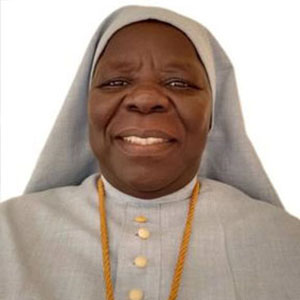
Rev. Sr. Leonora Torach, MSMMC
- Counselling Psychologist.
Building on her experiences in caring for the dying as a Reverend Sister of Missionary Sisters of Mary Mother of the Church (MSMMC) and Counselling physcologist, she articulated the presence and interaction of multiple dimensions of suffering experienced by people as they approached the end of life. To address these, she conceptualized a collaborative and multidisciplinary approach to caring for people and their families. She put into practice the idea that, as she said, “you matter because you are you, and you matter until the end of your life.” this has given me opportunity to start St. Basil Palliative Home Care Promotion in Arua City (Uganda)
As we emerge from what we hope was the worst of a global pandemic, and as we grieve the loss of friends, colleagues, those too-many hundreds and thousands unknown to us, and what we knew to be normal, the idea of a positive and creative attitude to death feels almost unbearable. Our greater collective awareness of injustice, thrown into stark relief by the pandemic and global events that transpired within and because of it, can leave one feeling hopeless. Yet, so many others of us in this field of hospice and palliative care have learned from our patients and their families, there are insights to be gained under threat of dying. There is light to be found in the darkest corners. We can experience healing even as we die. Many of us feel that we have gained new insight into just how precarious and precious life is.
Among the insights I have gained in the past years of work in this field, and over the last 20 months, is the importance of relationships. Mattering is a relational construct—we matter to someone; someone matters to us. Yet the longstanding tension in healthcare between disease-centered and person-centered models of care have paid little attention to these relationships. Palliative care has infused healthcare with expertise and evidence that highlights the value of whole person care, interdisciplinarity, symptom management, and communication. Meanwhile, what I think we have proven to be very good at, out of necessity, is building relationships that enable and contribute to a person’s search for meaning in life when life may be drawing to its close.
As we embark on the next chapter of St.Basil Palliative Home Care Promotion history, I hope to honor our past by making our implicit focus on relationships explicit. Through our dedicated team, teaching, and clinical care, I hope to cast a light on the relationships we have with ourselves and our loved ones, the relationships we cultivate in the spaces in which people affected by serious illness seek healthcare, and the systems that must be transformed to enable and enhance these authentic healing relationships. I believe this has the potential not only to accelerate the transformation of care for people affected by serious illness, but also to transform healthcare write large. I believe that this will be our part in bringing equity and justice to healthcare. And I believe that this is how we will best honor the legacy of those for whom we’ve had the privilege of caring.
The Background or History of:
St. Basil Palliative Home Care Promotion
Palliative Care Services is real within an African Traditional Setting rooted in Family life to support consecrated vocations in moments of both joys and challenges. This idea was initiated by the family of Omony, spear headed by Aunt Berna and Uncle Charles to support the vocation of their consecrated family members especially their blood Sister, Rev. Sr. Leonora Torach, MSMMC whose passion in counselling, triggered with the outbreak of HIV/AIDS in the 1980s and now counselling is more than HIV/AIDS.
Her focus has been to support the consecrated persons and their immediate family members as the services gets extended to the communities within and beyond as the word goes “Charity begins at home” Many consecrated persons get involved tirelessly in various pastoral activities both locally and beyond.
As palliative care services gets big and bigger, other Laity of good will persons of all walks of lives have join the Omony’s family to embrace reaching out to the terminal ill clients with the same focus, support to the consecrated persons. The Omony family has handed over the entire ministry into the hands of the promoters. These promoters came together to join hands together to strengthen this initiative that started as a result of the HIV scourge which had a devastating effect on some of their family members.
The members in question a midst stigmatization, marginalization leading to depression and lack of drugs made the disease look like a death sentence. This was even worse for the consecrated members of the family who were never expected to be survivors hence the need to support these groups of persons through counseling and care to give them hope became a must.
The conservatism surrounding the consecrated was so touching that even either the affected or infected individuals feared to come out openly. Thank God that the ARV drugs were finally discovered, however palliative condition has been and is still caused by other conditions like the aging process, life styles, and hereditary factors resulting in heart problems, hypertension, stroke, diabetes, cancer and other forms of disabilities all of which need support.